Style experiments · 3 min read
Take a step back from a jewellery close-up
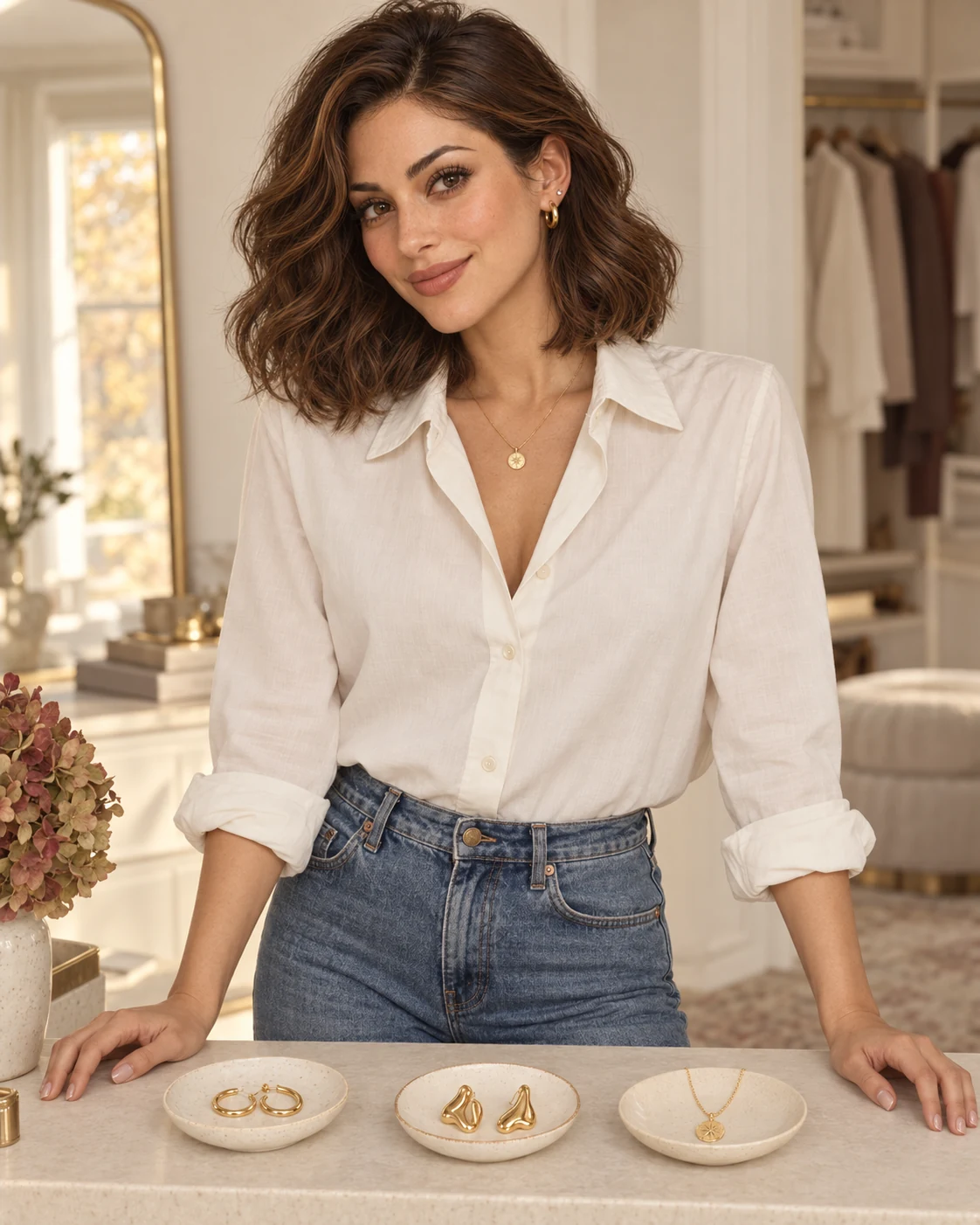
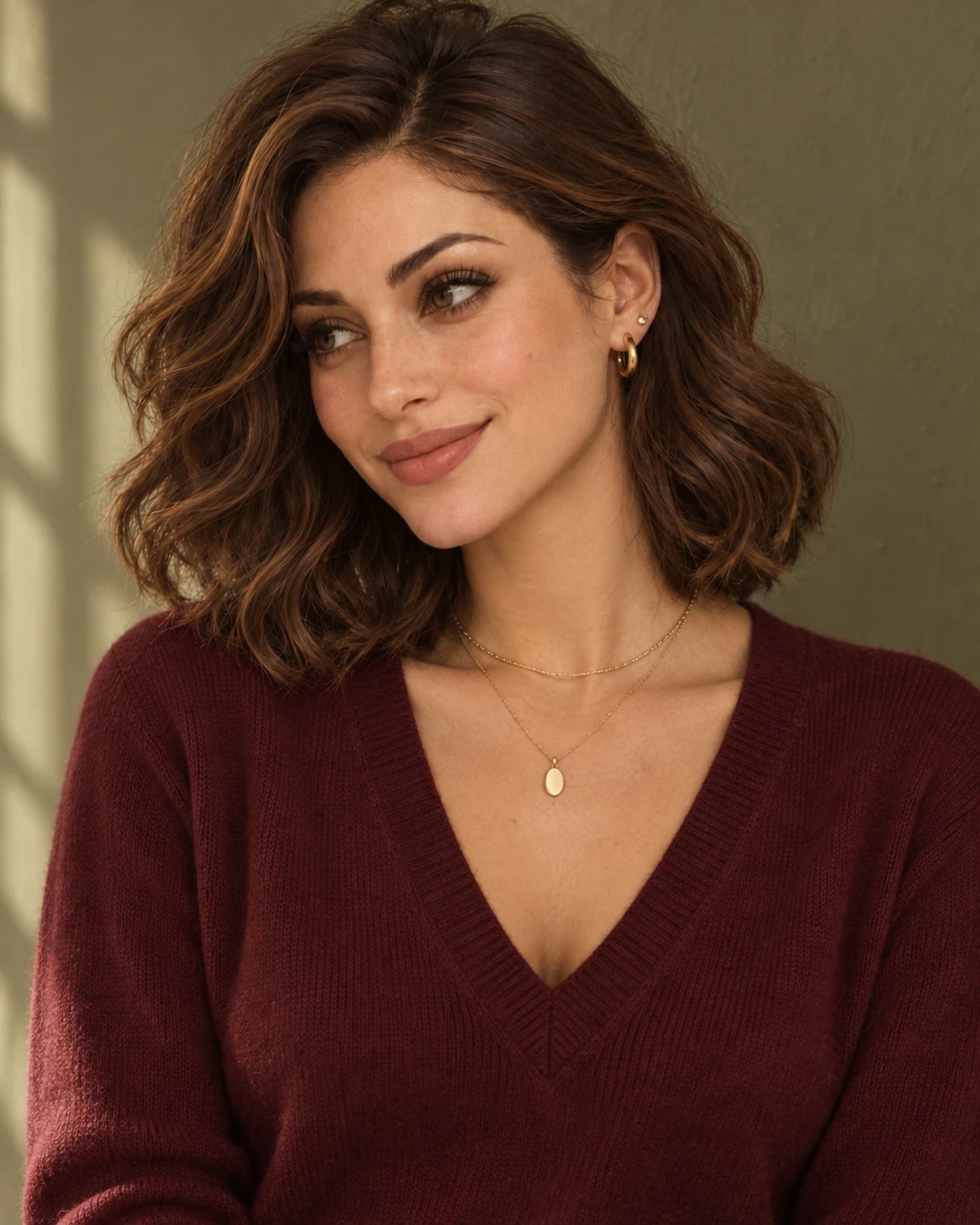
A detail you love up close may play a different part in the whole outfit. Use two frames to explore both the piece and its place in your day.
The detail and the whole answer different questions
A close look at the curve of an earring on your phone may make you love it immediately. Seen with your clothes, that same earring may become a small detail beside your face. These impressions can coexist. One describes the piece itself; the other describes its place in your look.
A small hoop might fill the centre of a close-up. In a waist-up view, the shirt collar, your hair and shoulder line are also present. You may still enjoy the hoop just as much while noticing that it plays a quieter role. Loving a detail does not require building the entire outfit around it.
Change only the framing
Choose a piece you already wear in your usual way. Make two photographs with the same clothes, light and posture: one showing the detail and the other its relationship with your upper-body outfit. You can also take one wider photograph and crop a copy, keeping the original. This separates the effect of framing from the effect of changing clothes.
Ask the close-up, “What do I enjoy here?” Your answer might be the curve of an earring or the shape of a pendant. Ask the wider frame, “What part does this detail play in the look?” It could be a quiet companion, a small accent or a personal detail that is easy to miss. Neither frame needs to win.
Keep both observations
A piece that looks prominent up close but quieter in daily wear does not automatically need a larger companion. That restrained effect may be exactly what you want. If you would prefer something more noticeable, record it as a separate preference without treating the first experiment as a mistake.
Write two short sentences beside the photographs: “Up close, I enjoy the curve. In the full look, I enjoy how small it stays beside the shirt collar.” You now have an observation about the piece and one about the combination. These photographs are personal styling notes, not evidence of the jewellery’s actual dimensions, material or quality.